How to hire remote employees? What works, what doesn't
A practical guide on how to hire remote employees without the legal and compliance mistakes that cost founders thousands.

Hashir Jamil
Growth Associate

Table of contents
Share
First, understand what you're actually getting into
Every article on how to hire remote employees starts the same way. "Define the role clearly. Use the right job boards. Build a structured interview process."
Not wrong. Just not enough.
The founders who get burned by remote hiring didn't fail because they wrote a bad job description. They failed because nobody told them that hiring someone in another country is a legal decision first, an HR decision second, and an operational decision third. Most people get that order completely backwards and the damage only shows up months later, usually in the form of a letter they weren't expecting.
Offshore remote hiring isn't just "hiring but cheaper." That framing is what gets founders into trouble.
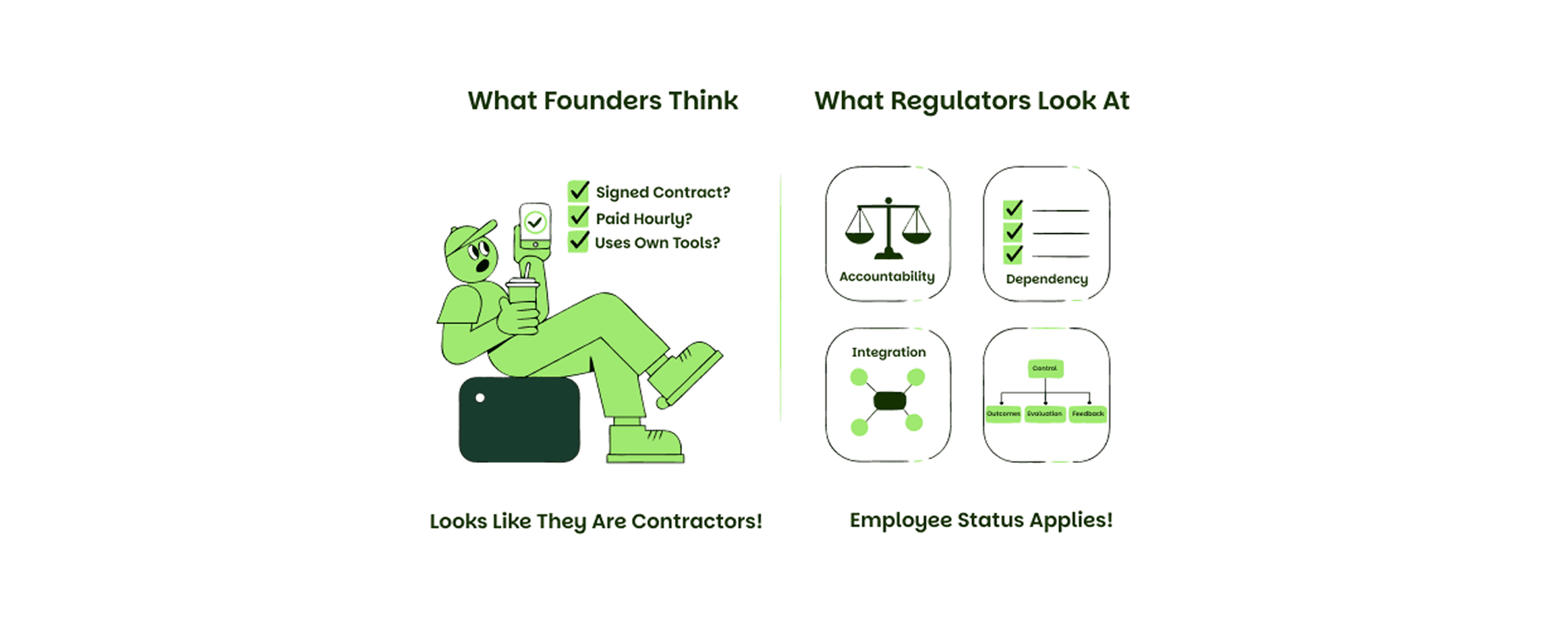
When you hire someone in another country, you're operating under their employment law, their tax system, and their definition of what makes someone an employee versus a contractor. Your contract doesn't override that. Your intentions don't override that. The regulators in that country will look at how the relationship actually functions, not what you called it.
Before you post a single job listing, be clear on three things:
The founders who treat this as a simple cost arbitrage are the ones who end up with compliance problems they can't afford to fight.
5 remote hiring mistakes founders regret
1. Treating a contractor like an employee
Same hours. Same tools. Same Slack channel. But on a contractor invoice because "it's simpler."
In most countries, regulators don't care what you call it. They look at how the relationship functions. Fixed hours, exclusive work, your tools, your direction, that's employment, regardless of the contract. Get this wrong and you're looking at back pay, mandatory benefits, and legal fees that dwarf whatever you saved.
2. Making an offer before knowing the timeline
You can find a great candidate and make an offer in two weeks. Setting up the legal infrastructure to hire them properly in a new country, without an EOR, can take 6–8 weeks. Most founders discover this after they've already promised someone a start date.
Sort the compliance before you make the offer. Not after.
3. Skipping the contract because 'We trust each other'
Trust is fine. A written contract is better. Without one, you have no enforceable IP ownership, no defined notice period, no dispute resolution path. Good relationships don't need contracts, until they do.
4. Ignoring the workspace situation
Your hire's output is directly connected to their working environment. Unstable internet, no desk, no separation between where they sleep and where they work, these aren't their problems to solve alone. A small equipment stipend and an internet allowance pay for themselves in output quality within the first month.
5. Applying in-person management logic to a distributed team
The thing that breaks remote teams isn't the time zones. It's founders trying to manage distributed people the same way they'd manage someone sitting next to them. Daily check-ins that should be async documents. Decisions that block on one person's availability. Visibility mistaken for productivity.
Remote work needs a different operating model, not a modified version of the old one.
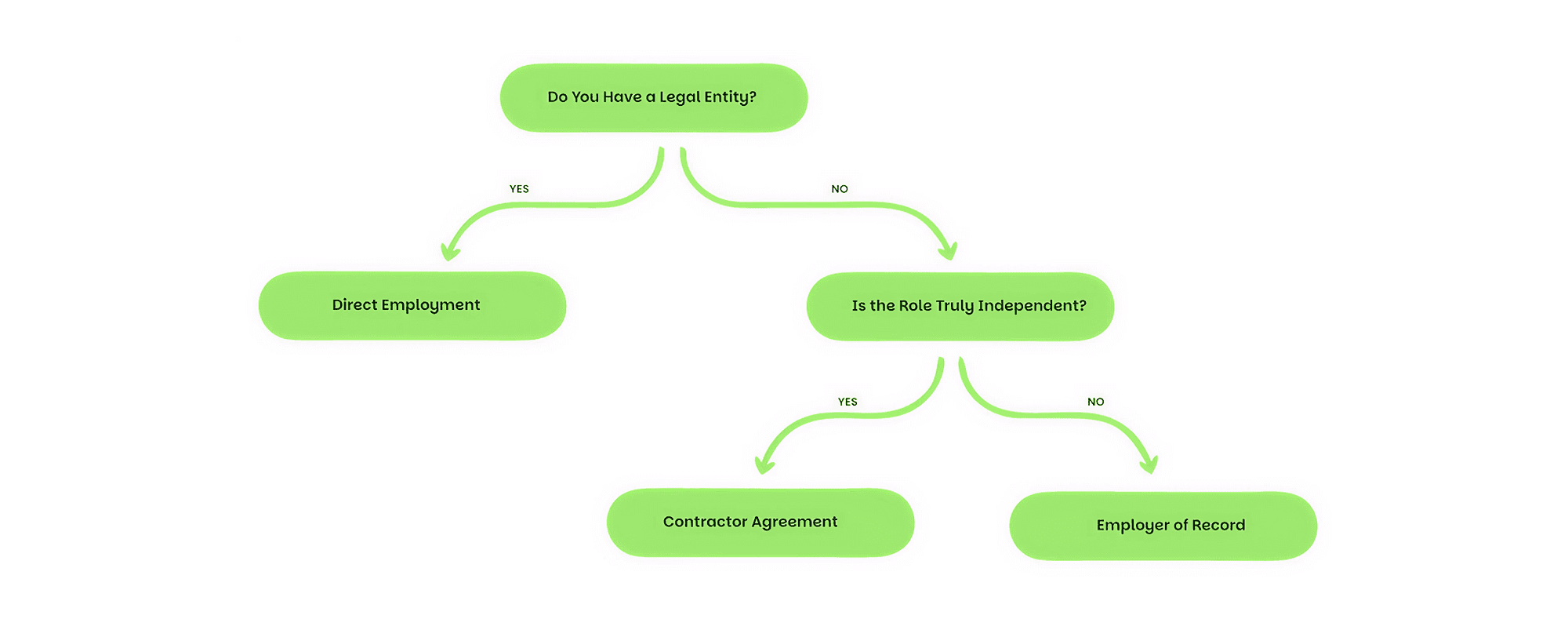
Define the role like the hire depends on it
Vague job descriptions attract vague candidates. That's not a hiring problem, it's a clarity problem, and it starts before you write a single word.
Your job description should reflect the real working conditions: communication tools, meeting cadence, response-time expectations, equipment stipend, onboarding duration. Remote candidates have been burned by founders who described a flexible role and delivered a chaotic one. Specificity builds trust before the first conversation.
Find candidates who actually know remote work
Not everyone who wants a remote job is good at remote work. The skill set is genuinely different: strong written communication, self-direction, async discipline, and the ability to make decisions without constant reassurance.
One practical filter worth adding: a short-written task in the application process. How someone responds to async instructions tells you more about their remote fitness than most interviews will.
AI-powered sourcing tools have made it faster to screen large pools of candidates but don't let the volume fool you into skipping the qualitative step. A candidate who looks perfect on a screen and can't communicate clearly in writing is not a remote hire. They're a problem that hasn't surfaced yet. Or you can onboard a hiring partner.
Get the legal and compliance right
This is the part most guides bury at the end. It should be at the front of your thinking.
When you hire across borders, you need a per-country checklist that covers at minimum.
Contractor vs Employee: Know before you make an offer
"Let's just keep them as a contractor. It's cleaner." It's one of the most common things founders say and one of the most expensive positions to defend later.
If someone works fixed hours, uses your equipment, takes direction from you exclusively, and works primarily for your company, most regulators will classify them as an employee regardless of what the contract says. The back pay and legal costs of getting this wrong will always exceed the cost of structuring it correctly from day one.
When to use an Employer of Record (EOR)
If you don't have a legal entity in the country you're hiring in and most early-stage founders don't, an EOR is the most practical option available. They employ the person locally on your behalf, handle payroll, taxes, and statutory benefits, and you manage the work.
What used to require 6 months of entity and hiring setup now takes about 2 weeks through an EOR. For founders moving fast across multiple markets, it's not just convenient, it's the only option that doesn't introduce unacceptable risk.
Onboard like retention depends on it
Remote hires decide whether to stay in the first 30 days. Not at the 6-month review. In the first month.
The loneliness problem in remote teams is consistently underestimated. Your offshore hire isn't just working from home. In many cases they're in near-complete isolation, in a country where your company culture means nothing yet, with no colleagues to interact with casually.
The founders who retain remote talent long-term are deliberately and consistently human about it. It costs almost nothing. It changes everything.
Bottom line
Hiring remote employees, especially across borders, is one of the most powerful moves a small founder can make. Access to global talent, lower overhead, the ability to build a team that outpaces competitors twice your size. The opportunity is real.
But so is the complexity. Employment law, tax obligations, misclassification risk, payment compliance, these aren't bureaucratic nuisances. They're the things that turn a great hire into an expensive legal situation if you ignore them long enough.
The founders who build great distributed teams aren't the ones who move fastest. They're the ones who move with intention, clear on the role, serious about compliance, and human enough to build real culture across time zones.
If you're not sure where your current setup stands, or you're about to make your first global hire and want to do it right from day one, that's exactly what we're here for. Talk to us.


